Yemen: Culture as a Driving Force for Resilience and Development
Brussels Showcases Projects to Safeguard Heritage and Build a Futur
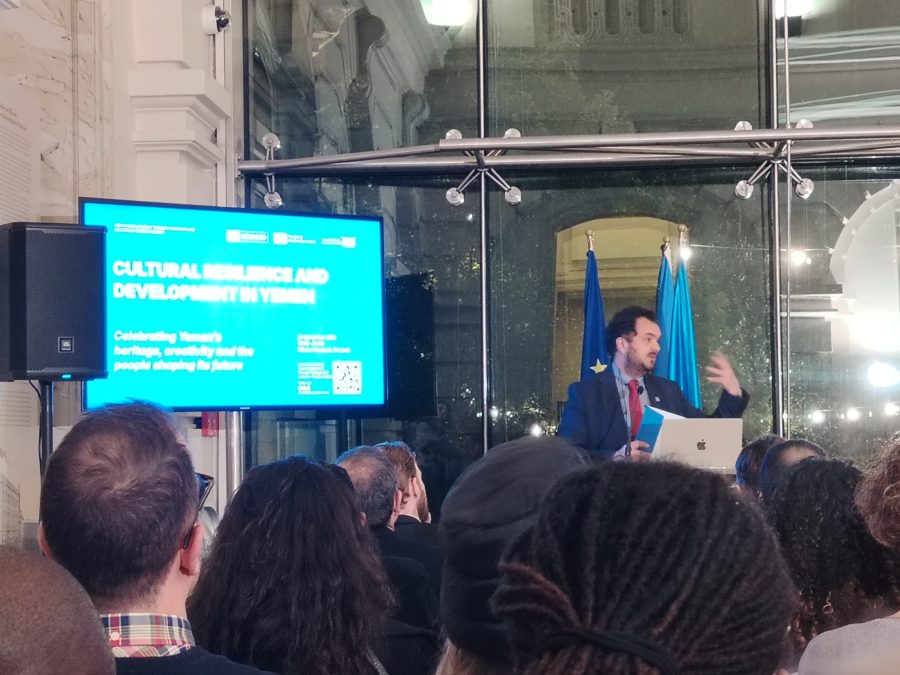
Yemen, a land of ancient civilizations and extraordinary architectural wealth, is looking to culture as a vital resource for creating new prospects for recovery and development. This vision was at the heart of Cultural Resilience and Development in Yemen, an initiative promoted by UNESCO and the European Union, held on 25 November 2026 at the BELvue Museum in Brussels.
Yemen is home to a cultural heritage of outstanding universal value, encompassing archaeological sites, historic cities, traditional architecture and the remains of an urban civilization whose roots stretch back more than two thousand years. Five Yemeni properties are inscribed on the UNESCO World Heritage List, while a further nine feature on the Tentative List, which includes sites proposed for future World Heritage recognition. Together, they offer a remarkable insight into the urban civilization that flourished in the Arabian Peninsula some 2,200 years ago.
Today, however, this extraordinary heritage is particularly vulnerable to the consequences of conflict. The Old City of Sana’a, the ancient fortified city of Shibam, the historic town of Zabid and numerous other sites of historical and architectural significance remain under serious threat. Years of war have further undermined the conservation of monuments, buildings and urban spaces, endangering not only the physical traces of the past but also the cultural identity and collective memory of local communities.
In response to these challenges, and with the aim of combining heritage preservation with new economic and social opportunities, UNESCO, in partnership with the European Union, launched the Youth Employment through Heritage and Culture in Yemen initiative in June 2022. The programme builds on an earlier phase of cooperation launched in 2018, entitled Cash for Work: Promoting Livelihood Opportunities for Urban Youth in Yemen. This continuity was highlighted during the Brussels event by UNESCO Project Manager Nuno Oliveira of Portugal, who oversees initiatives focusing on cultural heritage preservation, urban rehabilitation and support for creative industries.
UNESCO’s programme and projects in Yemen have been designed to address the urgent need to rehabilitate cultural heritage, promote cultural activities and initiatives, and, at the same time, create employment opportunities for young Yemenis. By involving them directly in the recovery and enhancement of the country’s cultural resources, these initiatives seek to turn heritage into a driver of skills development, employment and local growth.
The Brussels event provided an opportunity to present the progress and achievements of this European Union-funded initiative. Its aim was to showcase results in the rehabilitation of historic heritage, cultural promotion and the development of the creative economy, demonstrating how culture can evolve from something to be protected into a concrete instrument of resilience and development.
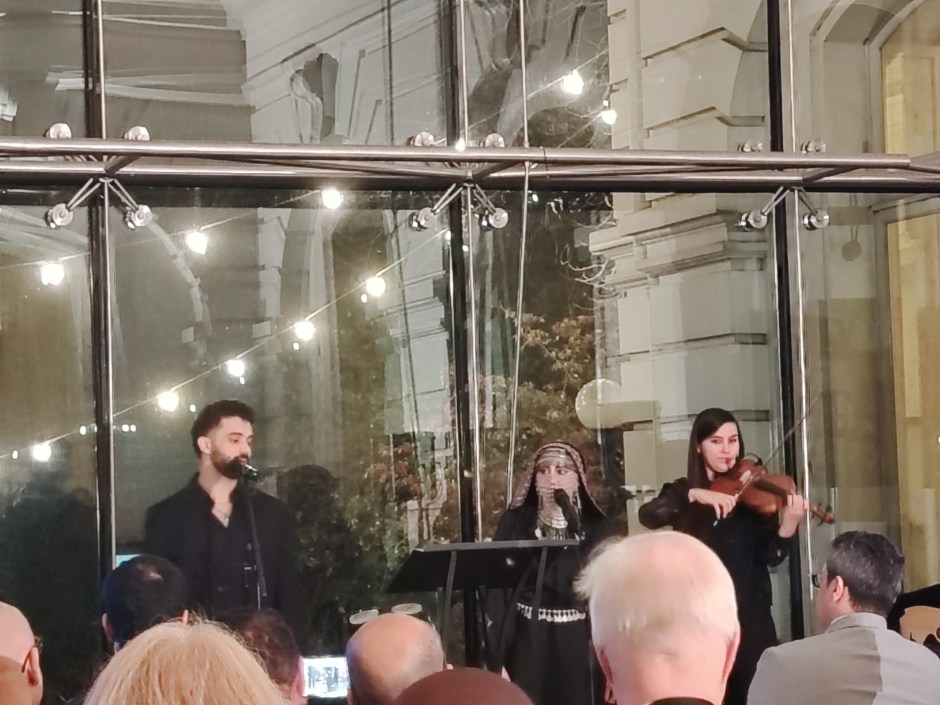
A photographic exhibition and a live performance of Yemeni music gave participants the opportunity to discover the activities carried out and their impact on local communities. Through images and music, the event sought to bring renewed visibility to a heritage of exceptional value and to the people working to safeguard it.
One of the key highlights of the initiative was a presentation on the revival of the Arwa Cinema in Aden, the first cinema in the country to resume operations after three decades. The restoration of the venue represents a particularly significant achievement: not merely the renovation of a cultural space, but also a sign of renewed artistic and social vitality. Its reopening has given the local community back a place for meeting, participation and shared experiences, demonstrating how the restoration of cultural spaces can help rebuild the social fabric.
The initiative also sought to create a platform for dialogue among representatives of European institutions, development cooperation organizations, cultural partners and members of the Yemeni community in Europe. A central focus of the discussion was the need to ensure that the results achieved can be sustained over time, while identifying new opportunities for cultural heritage to become a lasting resource for job creation, stronger social cohesion and Yemen’s long-term recovery.
The institutional significance of the event was underscored by the participation of Jean-Charles Van Eeckhaut, representing the European Commission’s Directorate-General for the Middle East, North Africa and the Gulf; Salah Khaled, UNESCO Regional Director for the Gulf States and Yemen; and Mohamed Taha Mustafa, Ambassador of the Republic of Yemen to Belgium and the European Union.
Also in attendance were Muti’a Ahmed Qasim Dammaj, Minister of Culture and Tourism of the Republic of Yemen, and Abdulmajid Alawi Al-Abbadi, Minister of Education. The presence of Yemeni government representatives, alongside officials from European institutions and international organizations, highlighted the importance of international cooperation in safeguarding the country’s heritage and creating new opportunities for its future.
In a country where years of conflict have severely damaged infrastructure, public services and places that embody collective memory, investing in culture also means preserving national identity, rebuilding community ties and creating new economic opportunities. The restoration of monuments, historic cities and cultural spaces, together with the involvement of young people in heritage-related activities, demonstrates that culture can go beyond the traditional boundaries of conservation and become a tangible force for shaping the future.
The Brussels event was therefore more than an opportunity to present the achievements of a cooperation programme. It also provided a moment to reflect on Yemen’s future prospects and on the importance of ensuring long-term support for the initiatives already underway. Its message was clear: memory, creativity and the active participation of younger generations can play a fundamental role in laying the foundations for a lasting recovery.
Enrico Cimarra


Leave a Reply