OCTOBER 7, THREE YEARS LATER: THE VICTIMS CONTINUE TO LIVE WITH THEIR TRAUMA
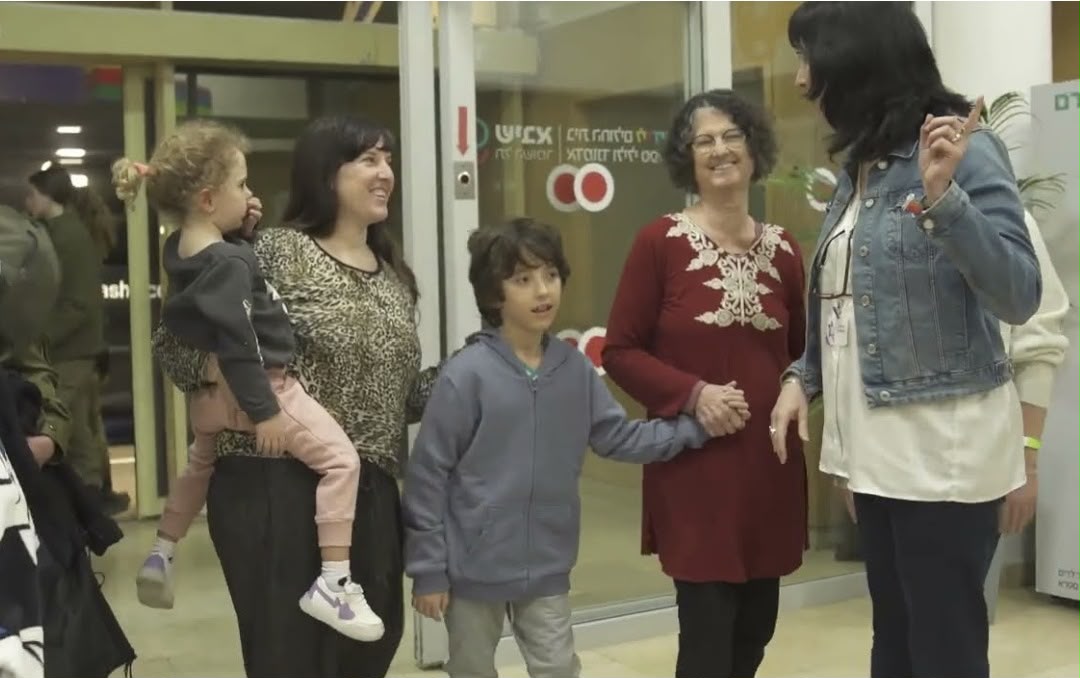
Nearly three years after October 7, survivors who returned from captivity in Gaza continue to grapple with trauma that affects their daily lives and still require psychotherapy, physical therapy, and medical care. Their testimonies were the focus of a webinar organized on September 17 by the Milton Friedman Institute, during which survivors, former hostages, rescue workers, and Israeli experts spent two hours answering questions from journalists representing various national media outlets.
Over the course of those two hours, the testimonies reconstructed the events of October 7 and what followed: the sexual violence, the hostages’ captivity, the abducted children, the recovery and identification of the bodies, and the traumas with which the survivors continue to live. Ilana Gritzewsky and Shoshan Haran recounted their experiences during captivity; Shari Mendes and Simcha Greiniman described what they witnessed while working with the victims’ bodies and at the sites of the attacks; Orit Sulitzeanu, CEO of the Association of Rape Crisis Centers in Israel, spoke about the consequences of the violence and the difficulty many victims still face today in speaking about it.
“I am here today to speak about the 1,200 Israelis who were killed in a single day and cannot speak for themselves,” said Ilana Gritzewsky. “I was sexually abused, but I survived so that I could tell my story. Dozens of people like me did not survive. And those who did survive often don’t dare to speak out.”
Born in Mexico, Gritzewsky moved to Israel on her own at age 16 and built a life with her partner, Matan Zangauker, at Kibbutz Nir Oz. At 6:30 a.m. on October 7, 2023, they were awakened by sirens, gunfire, and screams in Arabic. They locked themselves in the safe room, with Matan trying to keep the door shut while Ilana calmed their dog. When the attackers entered the house, the two jumped out the window. Ilana lost contact with Matan, hid on the neighbors’ porch, and was discovered, grabbed by the hair, beaten, dragged across the floor, and thrown against a wall.
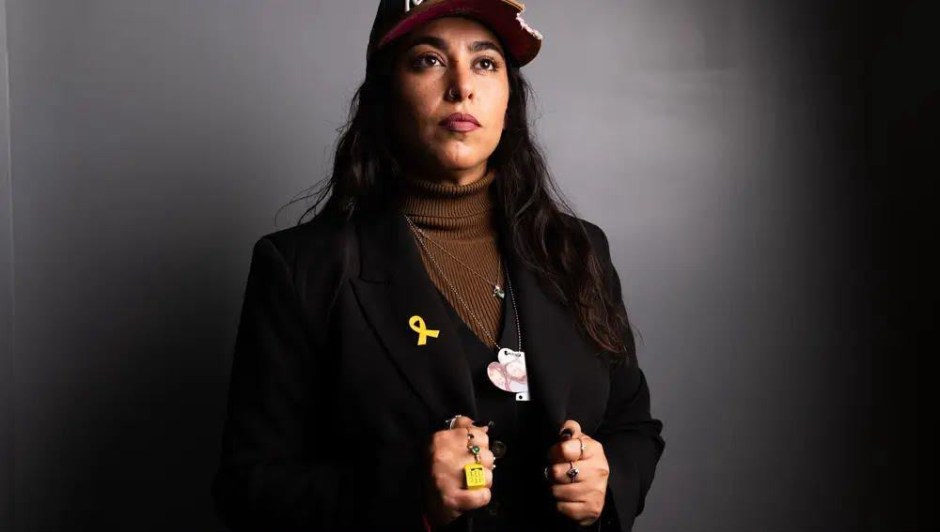
She was forced onto a motorcycle and taken toward Gaza. She recounted being groped and sexually abused during the journey until she lost consciousness. She awoke half-naked in a destroyed house, surrounded by Hamas terrorists. “I didn’t know exactly what had been done to my body during the minutes I was unconscious. But my soul already knew: nothing would ever be the same again.”
She was taken into captivity with a fractured jaw and pelvis, damage to one ear, and a burned leg. During her 55 days in captivity, she lost 12 kilos, received very little food and water, and did not receive adequate medical care. One of her captors, she said, told her she would never get out, that he would marry her and have children with her. During one transfer, she was forced to walk through Gaza holding his hand “as if I were his wife.”
After more than 50 days, she discovered that Matan was also being held hostage and was not far away. She repeatedly asked to see him. The kidnappers replied, “Later,” and even made her clean the kitchen, leading her to believe they would eventually take her to him. The meeting never took place. When they told her she would be released, she initially refused to leave without Matan. “I knew that if I left, my soul would remain there, in Gaza.” Matan was released after 738 days. Today, the two are engaged and will get married. Ilana continues her recovery journey through psychotherapy, physical therapy, medical appointments, and treatment.
Shoshan Haran, a scientist and founder of Fair Planet, was abducted from Kibbutz Be’eri along with her daughter and grandchildren and remained a hostage for 50 days. Her husband Avshalom, her sister Lilach, her brother-in-law Evyatar, and other family members were killed. Haran spoke of the need to protect the children during their captivity, living with fear and without knowing the fate of her family members. The webinar also addressed the Israeli children who were abducted and the toys that had been prepared for them in Gaza.
Simcha Greiniman, a ZAKA volunteer for over thirty years, described what he found when he entered homes after the attacks. In one room, he reported, blood covered the floor so thickly that the volunteers slipped and could not walk. To soak it up and continue their work, they had to use twenty bags of rice. Greiniman spoke of mutilated bodies, victims with broken legs, and human remains that had to be collected and identified. ZAKA volunteers collect bodies, body tissues, and blood to aid in identification and enable burial in accordance with halakhah, Jewish religious law.
Shari Mendes, a reservist with the Israel Defense Forces’ Casualty Care Team, described the work at the Shura military base, where the bodies were brought to be identified and prepared for burial. The process involved medical personnel, dentists, and other specialists, with the priority being to identify the victims, notify their families, and facilitate burial. Mendes spoke about the condition of the female bodies and the injuries observed following the attacks, including those interpreted as consistent with sexual violence.
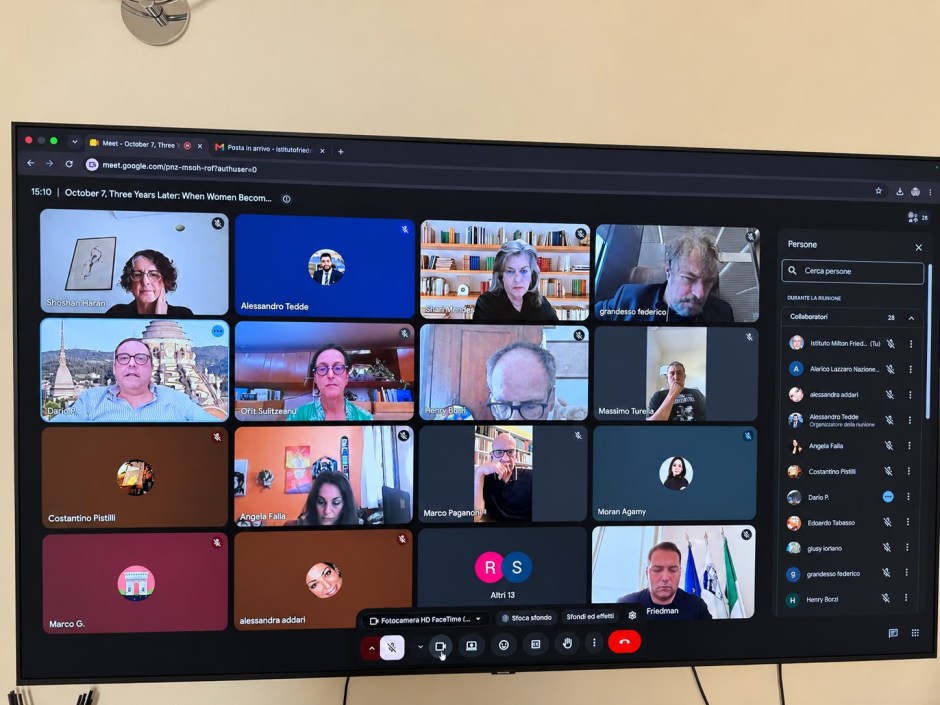
Orit Sulitzeanu, CEO of the Association of Rape Crisis Centers in Israel, explained how long it can take for a victim of sexual violence to be able to speak out about what she has endured. Many of the potential victims of October 7 were killed and will not be able to testify. “We are citizens; we are civilians. We don’t represent anyone. No one pays us to do this,” she said, referring to the efforts of survivors, rescuers, and volunteers who continue to share what happened.
One of the journalists’ questions concerned the international response: has the world forgotten the victims of October 7, or has it never fully understood what happened? Qatar was also called out in the response. According to claims made during the webinar, Doha has invested substantial resources in spreading a narrative favorable to the Palestinian cause through social media, TikTok, and college campuses, reaching primarily younger generations.
The same theme resurfaced in Gritzewsky’s concluding remarks. After two years spent fighting for the return of the hostages, he explained that today their struggle also concerns how the past will be remembered. “Does anyone still remember our pain?” he asked, going on to question why so many people in the West view Hamas as a liberation organization.
Nearly three years later, medical treatment, rehabilitation, and trauma are still part of daily life for many survivors. Former hostages, family members, and rescuers continue to share what they experienced and witnessed, in part to give a voice to those who were killed and to those who are still unable to speak.


You must be logged in to post a comment.