EurAfrican Forum 2026: Africa Rising, andthe Search for a New Model of GlobalCooperation
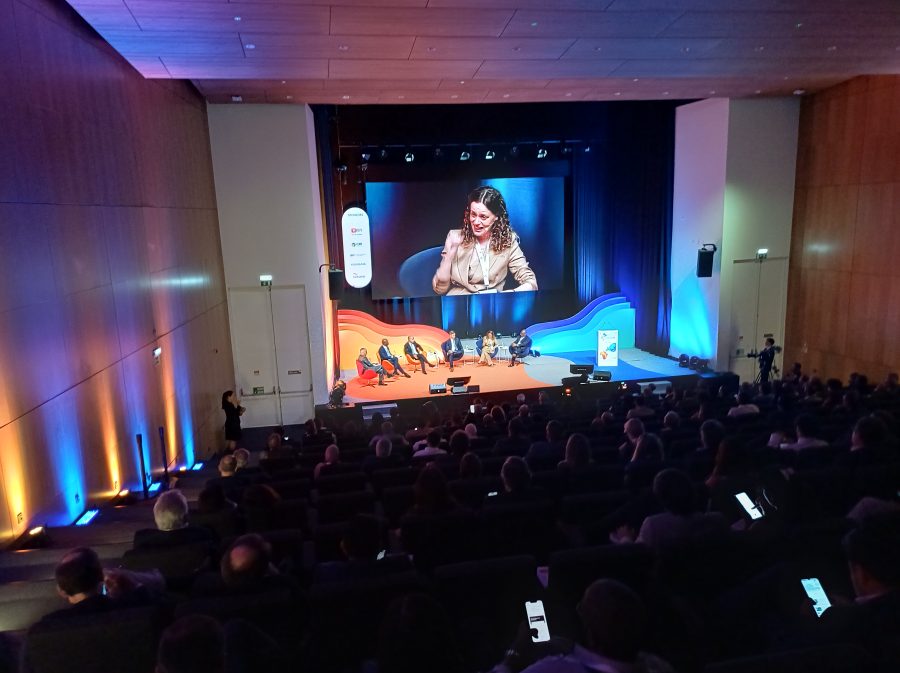
By bringing together political leaders, business executives, investors, researchers and innovators, the ninth EurAfrican Forum placed Africa’s rise at the centre of a wider conversation about global growth, resilience and shared prosperity.
Africa’s growing influence is no longer simply a question of demographic potential or future opportunity. It is increasingly shaping the global conversation on economic growth, innovation, investment and geopolitics. That was the premise behind the ninth edition of the EurAfrican Forum, held on 15 and 16 July 2026 in Cascais, Portugal, under the theme “Africa Rising: Prosperity Through Global Cooperation.”
Organised by the Portuguese Diaspora Council, the Forum was designed as an action- oriented platform to strengthen cooperation between Europe and Africa, promote green and inclusive growth, identify innovative business and impact-investment opportunities, and create stronger synergies between the two continents’ innovation ecosystems. Its 2026 theme reflected Africa’s growing influence as a driver of global growth, innovation and geopolitical transformation, while asking how international cooperation can turn this momentum into sustainable prosperity and shared stability.
The Forum’s programme offered a broad reading of what that transformation requires.
The opening session, featuring António Calçada de Sá, Pedro Oliveira, Luís Almeida Capão and José Manuel Durão Barroso, was followed by a conversation between the Presidents of Portugal and Mozambique, António José Seguro and Daniel Francisco Chapo. The presence of political leadership from both sides of the Euro-African relationship set the tone for a Forum in which cooperation was approached not as a single policy area, but as a strategic framework spanning economics, science, energy, infrastructure, technology and geopolitics.
The first major theme was human capital, addressed through a session on “Strengthening Health Research through Global Cooperation.” With contributions from Michael Sheldrick, Ignasi López Verdeguer, Luis Jodar, Maria Mota and Marie Ange Saraka-Yao, and closing remarks by Vivian Onano, the session highlighted the central place of scientific capacity and talent in any long-term development strategy. Its inclusion in the programme also reflected a wider reality: health research is increasingly an international endeavour, and the ability to develop knowledge, nurture talent and build effective partnerships is fundamental to resilience and sustainable development.
The Forum then moved to the economic relationship between Africa and the rest of the world. The session “Building Trust in a Multipolar World” brought together figures from investment, banking, logistics and infrastructure finance. Its focus on trade and investment reflected the growing importance of trust, connectivity and capital flows in a global economy being reshaped by geopolitical uncertainty and changing economic centres of gravity.
Energy was considered through the lens of “Building Resilient, Sustainable and Inclusive Futures.” The participation of experts from the energy industry, legal and consulting sectors, renewable energy and business illustrated the complexity of the transition ahead. For Africa, the energy challenge is inseparable from development and industrialisation; for Europe, it is increasingly linked to resilience, sustainability and the diversification of economic and strategic partnerships.
The same interconnected perspective emerged in the discussion on infrastructure, framed as “A Driver of Development, Resilience and Sovereignty.” Leaders from infrastructure, engineering, manufacturing, construction and architecture explored a field that lies at the foundation of economic transformation. Infrastructure is not merely about roads, buildings or logistics: it determines the capacity of economies to connect, compete, withstand shocks and exercise greater strategic autonomy.
On the second day, the Forum turned explicitly towards the international context. Following an institutional intervention by Portugal’s Minister of State and Foreign Affairs, Paulo Rangel, the geopolitical session asked a fundamental question: “How Will Africa and Europe Navigate Global Geopolitical Turbulence?” The participation of diplomats, academics, financial experts and institutional leaders reflected the increasingly complex environment in which Euro-African relations must evolve.
The final substantive theme, “Scaling Digital Ecosystems for Shared Prosperity,” focused on innovation and technology. The presence of leaders from systemic innovation, telecommunications and venture capital underscored the importance of moving beyond isolated technological successes towards ecosystems capable of scaling innovation and generating broader economic and social impact.
Across these different themes, a common picture emerged.
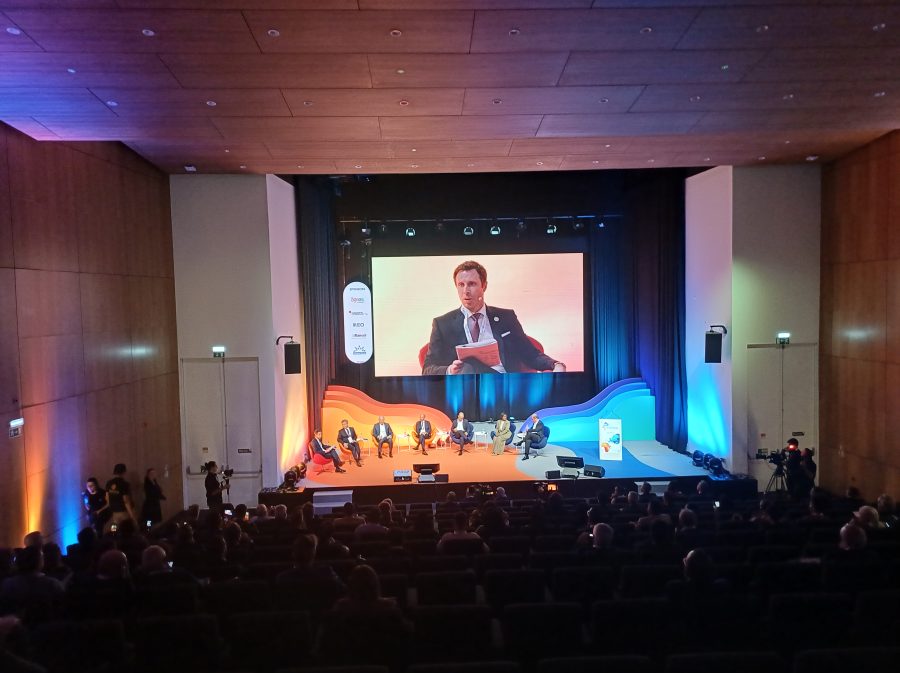
Africa’s rise is creating opportunities that extend far beyond the continent. But translating those opportunities into sustainable prosperity will require more than economic growth alone. It will require investment in people, scientific research, infrastructure, energy, technology and institutions — as well as a deeper capacity for cooperation between Africa and Europe.
The Forum’s programme also pointed to the importance of trust. Whether the issue is investment, scientific research, energy partnerships or digital innovation, meaningful cooperation depends on confidence between governments, institutions, businesses, investors and communities. In an increasingly multipolar world, trust may become one of the most valuable forms of strategic capital.
The broader message of the ninth EurAfrican Forum was therefore one of interdependence. Africa’s transformation and Europe’s future are not separate stories. They are increasingly connected by trade, investment, energy, technology, knowledge, infrastructure and geopolitics.
The challenge now is to turn this recognition into action.
The Forum’s central premise — “Africa Rising: Prosperity Through Global Cooperation” — ultimately points towards a new understanding of the Euro-African relationship. The objective is not simply to manage existing ties, but to build stronger partnerships capable of creating shared value. That means moving from potential to investment, from dialogue to implementation, and from cooperation in individual sectors to a more comprehensive partnership.
If Africa’s rise is one of the defining developments of the twenty-first century, the question is no longer whether the world should engage with it. The question is how that engagement can be structured so that growth becomes inclusive, innovation becomes scalable, investment becomes transformative, and prosperity becomes genuinely shared.
That is the opportunity — and the challenge — that the EurAfrican Forum placed before its participants in 2026.
Mario Parrot


You must be logged in to post a comment.