European Council Summit: results of the first day
 Copyright: European Union
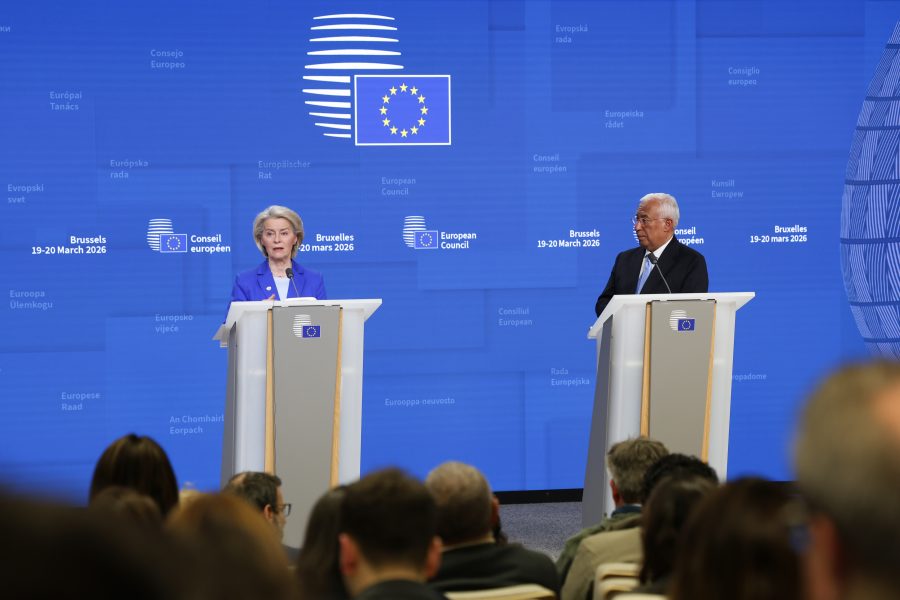
The first day of the European Council summit of 19 and 20 March 2026, held in Brussels, was marked by a significant departure from the initially planned agenda. Although the meeting was meant to focus primarily on the European Union’s economic competitiveness, geopolitical factors — notably Budapest’s position and the escalation of tensions in the Middle East — ultimately dominated discussions and blocked key decisions.
The bloc’s competitiveness agenda
The summit’s main objective was to advance measures to strengthen the EU’s competitiveness, including deepening the single market, defining the next multiannual budget, and developing strategies to boost productivity and economic resilience. However, these issues were largely sidelined. Leaders’ attention was diverted by external crises and internal divisions, preventing tangible progress in an area considered strategic for the Union’s future.
The 20th package of sanctions against the Kremlin
No progress was made on the 20th package of sanctions against Russia. The deadlock was mainly due to opposition from Hungary, led by Viktor Orbán, who exercised his veto power. This impasse highlights the EU’s growing difficulty in maintaining a united front towards Russia, particularly when national and energy interests come into play.
The €90 billion loan to Ukraine
The €90 billion loan intended to support Ukraine and its president, Volodymyr Zelenskyy, in the war against Russia was also stalled. Although this support had already been agreed in December, the decision was not implemented due to the Hungarian veto. The situation worsened following the destruction of the Druzhba pipeline, which had supplied cheap Russian oil to Hungary and Slovakia, prompting Budapest to harden its stance. In the meantime, Ukraine agreed to repair the pipeline, the European Commission deployed a technical mission, and countries such as Croatia offered alternative supply solutions. Nevrtheless, the blockage persisted, with the President of the European Council, António Costa, describing the situation as “blackmail”. This impasse represents a serious blow to the EU’s credibility.
Response to the war in the Middle East and the energy crisis
Another dominant issue was the European response to the war in the Middle East associated with Donald Trump, as well as the energy crisis triggered by the blockade of the Strait of Hormuz — a crucial route for global oil transport. French President Emmanuel Macron advocated a diplomatic approach at the United Nations level to ensure the reopening of the maritime route. However, it became clear that there is no consensus among Member States for any form of military intervention, revealing limitations in the EU’s ability to act in a unified manner in international crises of this kind.
Review of the EU carbon pricing system
The sharp rise in energy prices (over 50%) reignited the debate on the Emissions Trading System (ETS). Two distinct positions emerged:
A group led by countries such as Poland and Italy called for a thorough revision of the system, arguing that it is too costly and overly ambitious in the current context.
Another group, including Spain, the Netherlands, and the President of the European Commission, Ursula von der Leyen, opposed structural changes, favouring temporary national measures to mitigate the impact instead.
The compromise reached was to keep the system intact while asking the European Commission to review it by July 2026, with the aim of reducing carbon price volatility and its impact on electricity costs, without undermining climate targets.
Conclusion
The first day of the summit exposed deep internal divisions and the strong influence of external factors on the European agenda. Structural issues such as competitiveness were pushed into the background, while critical decisions on sanctions against Russia and support for Ukraine remained blocked. At the same time, the crisis in the Middle East and pressure on energy prices revealed strategic divergences among Member States, underlining the challenges the EU faces in acting cohesively in an increasingly unstable international environment.
Mario Parrot
 Brussels Diplomatic
Leave a comment