Greenland Is not on sale
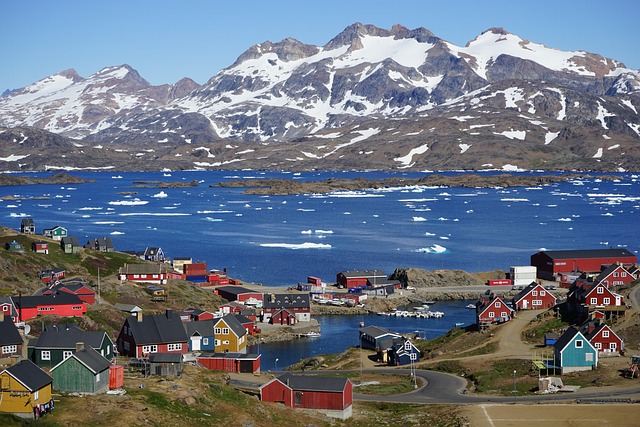
Plenty of EU voices against Trump’s plan to “Buy” Greenland
By David Barry
UE politicians and international law experts from all over Europe continue to appose to the American President Donald Trump to annex the wealthy island of Greenland. Marie-Agnes Strack-Zimmermann, EU Liberal Democrat Party politician and Chair of the Security committee in the EU Parliament, believes it is desirable for the Bundeswehr to be deployed in Greenland. NATO should not leave the island to Donald Trump, because Germany also has interests there.
Marie-Agnes Strack-Zimmermann, chair of the EU Defence Committee, calls for a NATO presence in Greenland. ‘Considering the threat situation that security politicians have been observing for years and which is more acute than ever, namely that the natural barrier, the ice, is melting due to climate change and this allows Russian and Chinese ships to penetrate the North Atlantic, a NATO presence in that country is essential’, the FDP politician told “Spiegel”.
If the Bundeswehr has the necessary technical potential, it should participate, because it is also in our interest that this passage is guaranteed, he added. However, other European partners should also get involved, if only to ‘signal to the USA that they do not have exclusive sovereignty over this matter, but that it requires the responsibility of all of us’, said Strack-Zimmermann.
Legal experts too seems not agree with the bizarre proposal of the America President. Asked about if US can “buy” Greenland, Professor Dr Matthias Goldmann holds, Chair of International Law at EBS University Wiesbaden and researcher at the Max Planck Institute for Comparative Public Law and International Law, explained “ No, especially not without the consent of the Greenlanders. Anything else would violate their right to self-determination. You can no longer sell off parts of a state territory. While the right to self- determination under international law is a more recent development, it goes back to the idea of popular sovereignty emerging during the Enlightenment. Accordingly, a monarch could no longer dispose of parts of his territory at will, even if this understanding was initially limited to European territory. The 20th century then saw the development of a general right to self-determination under international law, which is mentioned in the UN Charta and in the first article of both UN Human Rights Covenants. It provided the basis for decolonization during the postwar period. In 2019, the International Court of Justice reaffirmed its validity under customary international law in an advisory opinion on the Chagos Islands. The United Kingdom had detached the islands from Mauritius and, unlike Mauritius, refused to grant them independence.”
The professor continued ”The right to self-determination means that peoples can decide over their own political affiliation. However, the question of how to define peoples is as old as international law itself. In the first place, peoples comprise whoever is a citizen of a given state. However, the Danish people, which therefore also includes the Greenlanders, cannot simply decide to sell Greenland. Greenlanders themselves are a people with their own right to self-determination. Furthermore, indigenous peoples also have a right to self-determination as part of their collective human rights. Denmark is therefore not free to dispose of Greenland. Only the Greenlanders themselves have control over Greenland in this matter. In addition to international law, Greenland’s status is also enshrined in the Danish constitution, which needs to be respected. And both the Greenlanders and the Danes have already strongly objected to an acquisition by the United States,”.
According to Goldmann In principle, international law does not recognize a right of secession for peoples within a state. However, the question is whether Denmark could resist the political pressure to hold an independence referendum in Greenland. Some voices in Greenland keep calling for this. The background to this desire for autonomy is the continuing tension with Denmark caused by the often forced modernization of Greenland in the 20th century. So far, the funding has kept Greenland tied to Denmark. However, Greenland has natural resources of its own that could potentially finance itself.
Also Denmark’s prime minister pledged to support Greenland against U.S. President Donald Trump’s expressions of interest in acquiring the Danish semi-autonomous territory as she landed in Nuuk recently for talks with its incoming government. More importantly then all five parties in Greenland’s parliament issued a joint statement on rejecting President Donald Trump’s latest effort to take control of the island. The statement was issued by the leaders of all five parties that won seats in parliament during the recent.
Another important negative comment then came from France, where Foreign Minister Jean-Noël Barrot clearly said “there is obviously no question that the European Union would let other nations of the world attack its sovereign borders”. It is crystal clear that the main actors of this issue: Greenland, Denmark and the EU are going to oppose and stop this ambitious plan of the American President, not everyone is on sale in this world.
 Brussels Diplomatic
You must be logged in to post a comment.