Is Belgium Copying the United States?
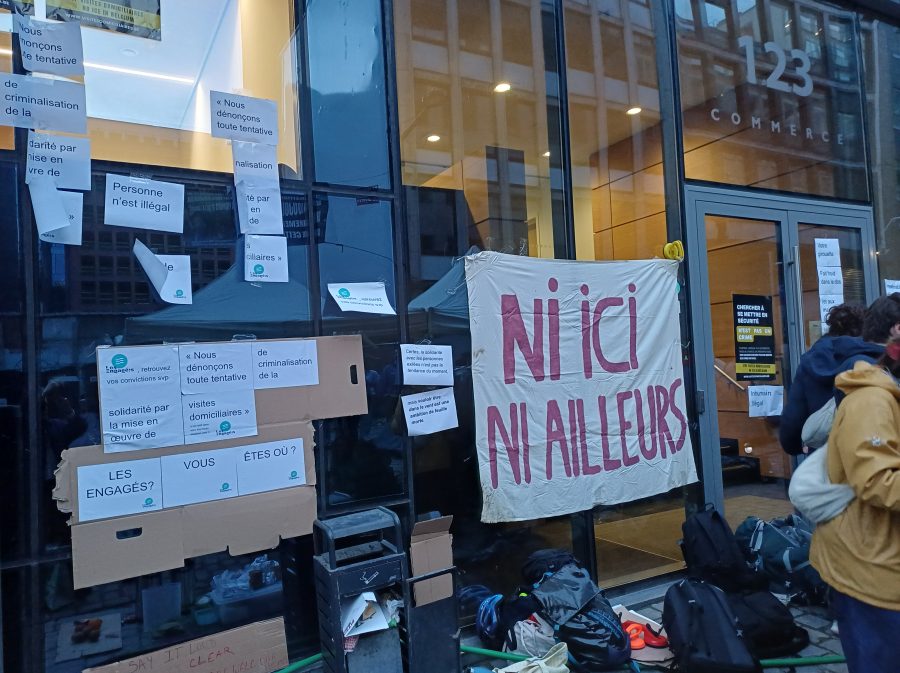
A night of symbolic camping outside the headquarters of Les Engagés (see photos attached) has reignited an explosive debate over Belgian migration policy. Bringing together supportive citizens, activists and exiled individuals, the action sought to denounce the centrist party’s backing for the proposed “home visits” scheme, a measure that would allow police to enter
private homes in order to detain undocumented migrants.
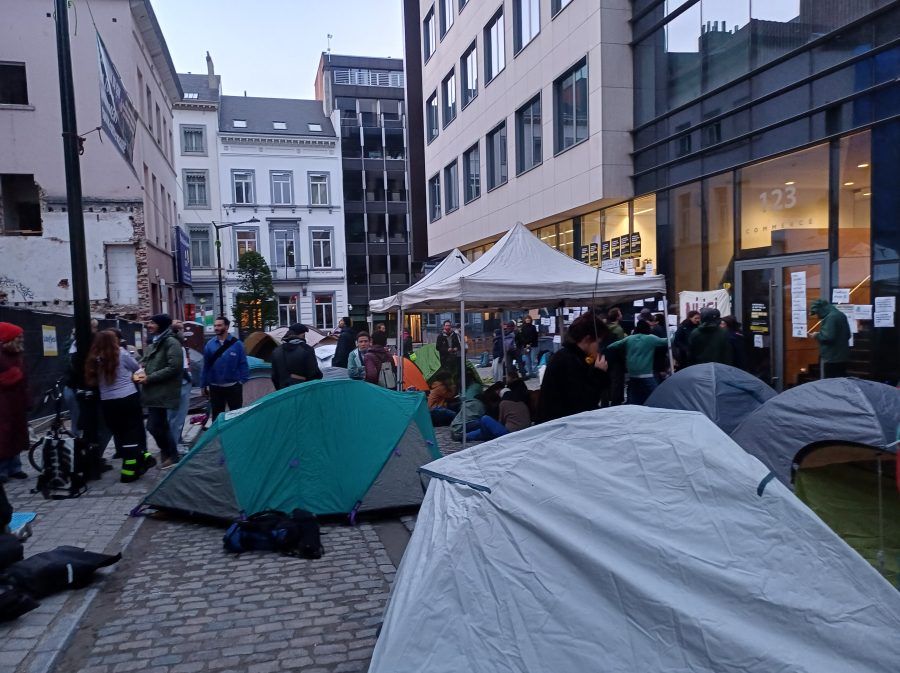
For the organisers, the paradox is striking: in 2018 and again in 2022, when the party was in the federal opposition under its former name, CDH, it strongly condemned the very same type of measures, describing them at the time as “authoritarian” and contrary to fundamental rights. Today, however, its leaders are defending the proposal on the grounds of new legal “safeguards” supposedly designed to regulate such interventions. Critics nevertheless argue that these safeguards remain largely inadequate. While authorisation from an investigating judge would indeed be required, opponents point out that this condition was already included in the 2018 proposal, which Les Engagés fiercely opposed at the time.
According to the associations and legal experts mobilised against the bill, the core issue remains unchanged: allowing police to intervene in private homes outside the traditional framework of criminal proceedings. The visits could take place at dawn, with the possibility of forcing entry and searching premises, without providing residents with the usual guarantees associated with a judicial investigation. The activists behind the aforementioned encampment also challenge the government’s security argument (see the translation of their press release attached). According to the government, the proposal would officially target individuals considered to pose a “threat to public order or national security”. Yet these notions are regarded as particularly vague.
Magistrates have already warned of the risk of overly broad interpretations, potentially applying to situations unrelated to any serious criminal threat. Opponents of the bill also stress that, in cases of genuine danger, the police already possess the necessary legal tools: arrest warrants, search warrants and criminal investigations supervised by a judge. Why, they ask, create a specific regime targeting undocumented migrants and the citizens who host them? This question is fuelling increasingly frequent comparisons with the practices of U.S. Immigration and Customs Enforcement, better known as ICE. In the United States, operations carried out by this federal immigration agency have often drawn strong criticism: early-morning raids on private homes, arrests in front of children, a climate of fear within immigrant communities, and the criminalisation of solidarity networks.
For Belgian associations, the parallel is becoming difficult to ignore. They fear that by turning homes into potential sites of immigration enforcement, Belgium may in turn be embracing a security-driven approach inspired by the harshest American policies. The activists place particular emphasis on the human impact of these measures. Even if children could not be directly arrested during such operations, they could still witness police interventions in their homes. Meanwhile, citizens providing shelter to migrants could see their homes searched despite having committed no offence.
Prime Minister Bart De Wever has also come under criticism. His recent statements about limiting legal appeals and discouraging certain migrant support networks are interpreted as a clear political signal: making it more difficult and riskier to assist undocumented migrants. In response to this direction, several centrist and liberal local representatives have begun expressing unease. In a number of Walloon and Brussels municipalities, motions against home visits have been adopted or supported by members of governing majorities. Beyond the legal debate, the controversy raises a broader question: how far is a European democracy prepared to go in the enforcement of migration control? For opponents of the proposal, Belgium’s answer is beginning to look dangerously similar to that of the United States.
Mario Parrot


You must be logged in to post a comment.