SOUTH SUDAN: EU STEPS UP EFFORTS TO PREVENT A HUMANITARIAN TRAGEDY
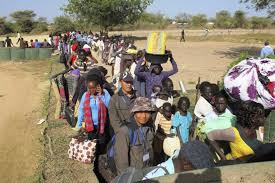
Due to the rapidly deteriorating humanitarian situation in South Sudan, the European Commission is ready to boost its live-saving assistance by €45 million to prevent an appalling tragedy in the country which is affecting the whole region. This upcoming funding has been announced during a high-level meeting on the South Sudan humanitarian crisis organised in Washington by the European Commission, the UN Office for the Coordination of Humanitarian Affairs and the United States Agency for International Development.
Despite the agreement on the cessation of hostilities signed on 23 January 2014, reports of violence continue. The crisis came on top of an already difficult humanitarian situation in this the newest andone of the poorest states in Africa following decades of conflict and underdevelopment, combined with seasonal flooding, frequent dry spells and outbreaks of diseases.
The first civil war, from 1955 to 1972, was between the Sudanese government and southern rebels who demanded greater autonomy for southern Sudan. The war ended with the 1972 Addis Ababa Agreement, which granted significant regional autonomy to southern Sudan on internal issues.
The second civil war erupted in 1983 due to longstanding issues heightened by then President Jaafar Nimeiri’s decision to introduce Sharia law. Negotiations between the government and the Sudan People’s Liberation Movement/Army, or SPLM/A of southern Sudan took place in 1988 and 1989, but were abandoned when General Omar al-Bashir took power in the 1989 military coup. Bashir remains president of Sudan today.
The violence that started mid December 2013 due to political turmoil in the capital Juba and spread to several states of South Sudan, has uprooted over one million people from their homes, including over 800 000 internally displaced people (IDPs). Around 68 000 are sheltered in UN compounds (UNMISS) in the country. Further hundreds of thousands are assessed to be affected in areas currently inaccessible to humanitarian organisations. Already before the outbreak of violence in December 2013, an estimated 3.1 million people or over a quarter of the population were in need of humanitarian assistance. There are now over 3 million people in need of humanitarian assistance and over 7 million people atsome risk of food insecurity with 3.7 million at immediate, crisis level risk. Humanitarian aid is delivered in very difficult circumstances. Hostilities, attacks on humanitarian workers and assets, and interference with reliefactivities seriously constrain access across South Sudan. During the rainy season, access to the populations in needs of life-saving assistance is further hampered as roads are flooded and become impassable. More and more refugees are arriving to the overcrowded sites in Uganda, Ethiopia, Sudan and Kenya. Internally displaced persons and refugees are completely dependent on humanitarian assistance
The new funding brings the Commission’s relief aid in South Sudan to €95 million for this year. The funds come from the European Development Fund and is still subject to final approval by the Member States. It will support immediate life-saving activities such as distributing essential food and non-food items, as well as providing shelter, health, protection, water, hygiene and sanitation. Part of the funding – €15 million – will directly address the urgent needs of South Sudanese refugees.
Claudio SANNA
 Brussels Diplomatic
Reblogged this on rovitothis201.