The Middle Corridor: Navigating Current Realities and Embracing Future Prospects

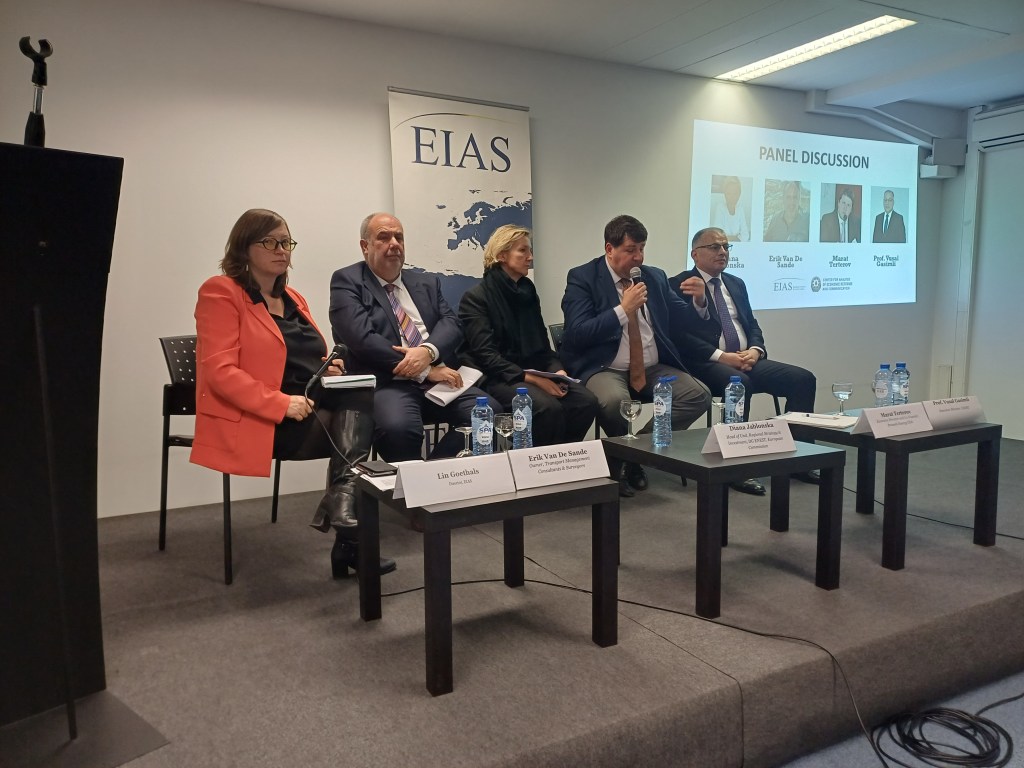
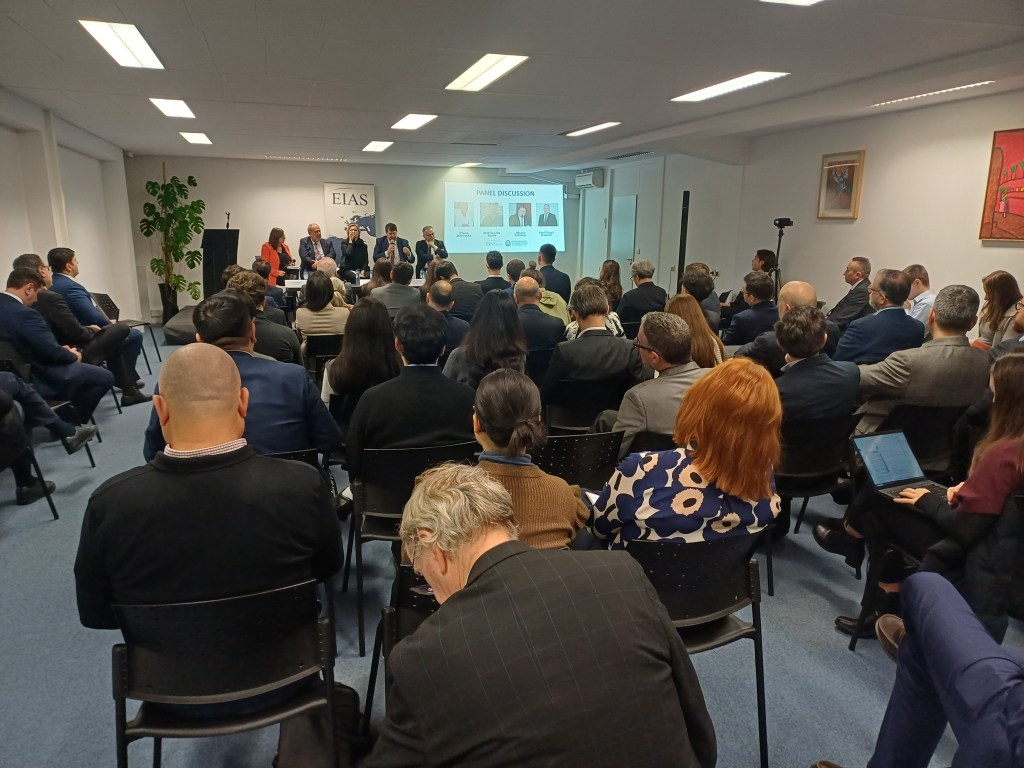
The European Institute for Asian Studies (EIAS) and the Center for Analysis of Economic Reforms and Communication (CAERC) of Azerbaijan, supported by key partners committed to advancing dialogue on Eurasian connectivity and economic cooperation, had the pleasure of organising the Conference and Book Presentation “The Middle Corridor: Navigating Current Realities and Embracing Future Prospects
The event highlighted the Middle Corridor’s role as a bridge between East and West, its importance for integrated transport and energy connectivity, and its contribution to innovation, green logistics, and infrastructure development. Participants also gained perspectives on the geopolitical significance of the Corridor, its role in fostering cooperation on the international stage, and the potential for advancing education, research, and private sector engagement across the region. The Event helped discover how this strategic route is reshaping transportation, logistics, and economic cooperation.

Vusal Gasimli
Executive Director, the Center for Analysis of Economic Reforms and Communication of the Republic of Azerbaijan (CAERC)
The book “The Middle Corridor: Navigating Current Realities and Embracing Future Prospects”, jointly developed by the Center for Analysis of Economic Reforms and Communication (CAERC), OECD and the CAREC Institute has been published in Romania. Authored by 22 scholars from 10 countries (Azerbaijan, Türkiye, Kazakhstan, China, the United Kingdom, Serbia, Pakistan, Austria, Spain, and Mexico), the book was published in English by University Press Târgu Mureș, a prestigious European academic publishing house Edited by Professor Vusal Gasimli, Doctor of Economic Sciences and Executive Director of CAERC, the publication offers in-depth analyses of the Middle Corridor’s strategic significance, development dynamics, and future prospects. The authors examine the economic impact of the corridor on the countries along its route, propose more agile and efficient transport management strategies, explore the application of digital technologies and innovative approaches in logistics, and offer relevant scientific-conceptual recommendations for enhancing the corridor’s potential.
Universal Press
Patrick GRIGNARD

 Brussels Diplomatic
You must be logged in to post a comment.